
Frequently Asked Questions - Find Answers Quickly
Here you can find answers to the most frequently asked questions about our products, technical approvals, and the ordering process.Use the categories to quickly find the information you need.
1 Wheel Spacers
Basics
What is a wheel spacer?
A wheel spacer increases the track width of your vehicle. It is installed between the wheel hub and the rim and, depending on the vehicle, provides a sportier appearance as well as improved handling.
What are the benefits of wheel spacers?
Wheel spacers provide a sportier vehicle appearance, allow the wheels to sit more flush with the fenders, and can improve handling by increasing the track width.
Which wheel spacers are suitable for my vehicle?
The appropriate wheel spacers depend on your vehicle, the rims installed, and the desired track width. In our Vehicle Search you can find all suitable systems and available spacer thicknesses for your vehicle.
What do the specifications “per wheel” and “per axle” mean?
The specification “per wheel” refers to the thickness of a single wheel spacer. The specification “per axle” corresponds to twice the spacer thickness, as two wheel spacers are installed on each axle.
Example: 15 mm per wheel = 30 mm per axle.
What do bolt pattern (LK) and center bore (NLB) mean?
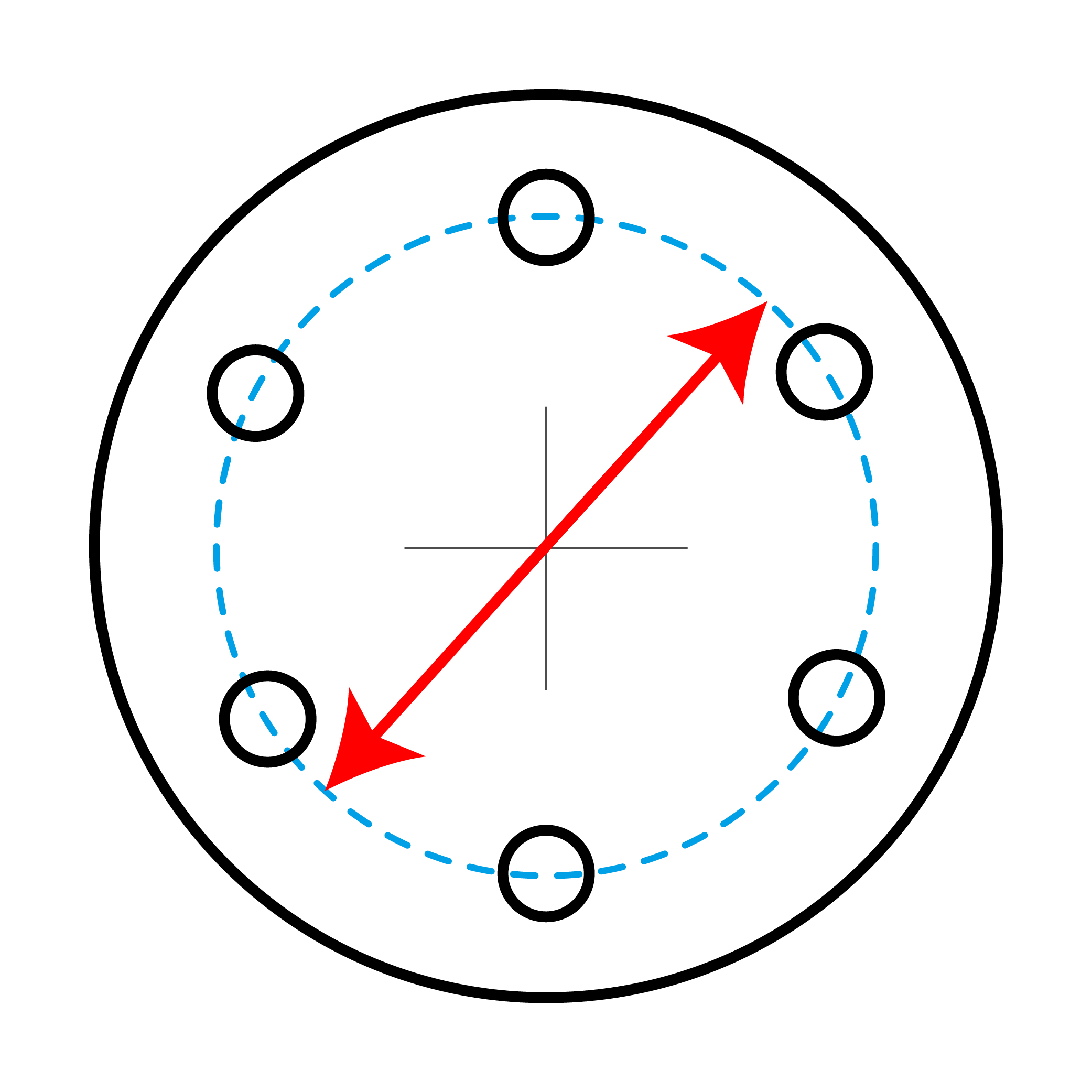
The bolt pattern (LK) describes the number and arrangement of the wheel bolts. It is specified as diameter/number, e.g. 5×112. In this example, 5 wheel bolts are positioned on a circle with a diameter of 112 mm. Here you can purchase our bolt pattern measuring tool.
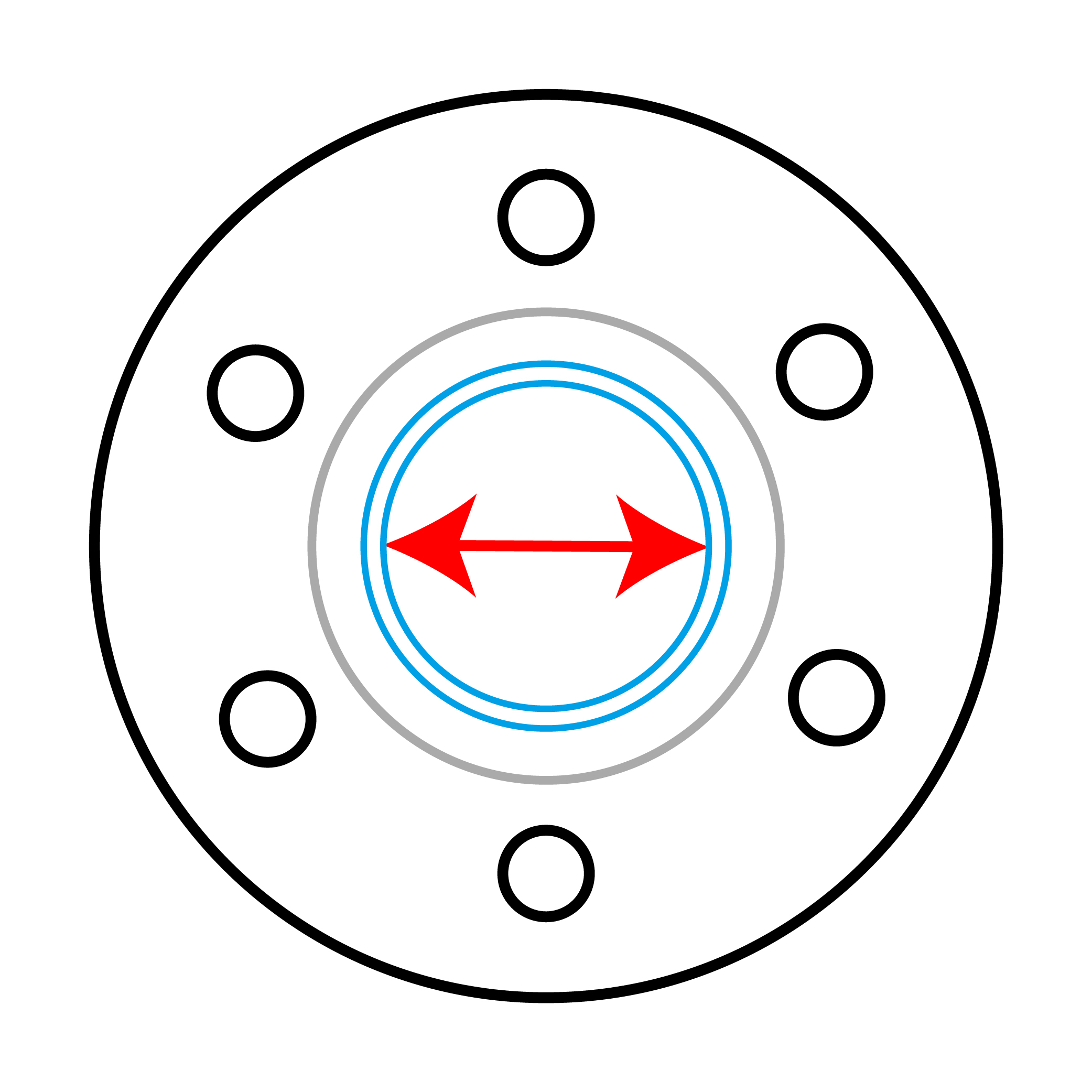
The center bore (NLB) refers to the diameter of the rim's center hole. It ensures that
the rim is centered correctly on the wheel hub and must correspond to the vehicle specifications.
What is wheel offset (ET), and how does it change when wheel spacers are installed?
Wheel offset (ET) is the distance between the centerline of the rim and the mounting surface of the rim on the wheel hub. It is specified in millimeters and determines how far inward or outward the wheel sits within the wheel arch.
Installing a wheel spacer reduces the effective wheel offset by the thickness of the spacer per wheel.
Example:
Rim: ET45
Wheel spacer: 15 mm per wheel
→ Effective wheel offset: ET30
Do wheel spacers affect handling?
Yes. By increasing the track width, wheel spacers can have a positive effect on handling. Depending on the vehicle, they can contribute to improved driving stability, more direct steering response, and reduced body roll when cornering.
However, the actual handling characteristics always depend on the vehicle, suspension, and wheel/tire combination.
Technical Questions
How can the technically maximum wheel spacer thickness be determined?
The maximum possible wheel spacer thickness is limited by several factors. The decisive factors are the offset limit as well as sufficient wheel clearance and wheel coverage. Installing a wheel spacer reduces the effective wheel offset (ET) by the spacer thickness per wheel. The resulting ET must not fall below the offset limit specified for the vehicle. The offset limit relates to the strength of the suspension and axle components and does not automatically ensure sufficient wheel clearance and wheel coverage. In addition, sufficient wheel clearance and the required wheel coverage must be ensured. Since the maximum possible spacer thickness depends on the vehicle, wheel and tire combination, as well as any lowering or suspension modifications, no general value can be specified. If in doubt, the combination should be checked directly on the vehicle. Tip: Use our Vehicle Search to find suitable wheel spacers for your vehicle.
Can I use different spacer thicknesses on the front and rear axles?
Yes, different spacer thicknesses can generally be used on the front and rear axles.
However, the following requirements must be observed:
- Installing wheel spacers only on the front axle is not permitted.
- Wider wheel spacers must not be installed on the front axle than on the rear axle.
The reason is that the vehicle's front-to-rear track width relationship must not be altered by the wheel spacers in a way that could promote oversteer.
Can I use wheel spacers with OEM wheels?
Yes. Many SCC wheel spacers are specifically designed for use with OEM wheels. You can find out which wheel spacers are suitable for your vehicle and original wheels using our Vehicle Search or in the respective product information.
Can I use wheel spacers with aftermarket wheels?
Yes. Depending on the vehicle, rim, and wheel spacer system, SCC wheel spacers can also be used with aftermarket wheels. The respective combination must be technically permissible and sufficient clearance must be available.
Can wheel spacers be used with steel wheels?
Yes, wheel spacers can generally be used with steel wheels. The steel wheel must have a flat mounting surface.
If the steel wheel does not have a flat mounting surface, the UST system (Universal Steel Wheel System) can be used depending on the vehicle and wheel spacer system. A precisely fitting stainless-steel intermediate disc creates a flat mounting surface, allowing many steel wheels to be safely combined with SCC wheel spacers.
Please refer to the respective product information or our Vehicle Search to determine whether use with steel wheels or the UST system is possible.
Can I combine wheel spacers with lowering springs or coilover suspension systems?
Yes, wheel spacers can generally be combined with lowering springs or coilover suspension systems.
However, it is essential that sufficient wheel clearance and wheel coverage are still ensured after lowering the vehicle. Depending on the suspension and wheel/tire combination, the maximum permissible spacer thickness may be reduced.
If in doubt, we recommend having the combination checked by a specialist workshop before installation or registration.
Do wheel spacers affect the wheel bearings?
Yes. Like rims with a lower offset, wheel spacers change the leverage between the wheel and the wheel bearing. This slightly increases the load on the wheel bearing.
However, when installed correctly and when using wheel spacers approved for the vehicle, this remains within the loads taken into account by the vehicle manufacturer and the relevant approval. Properly installed and approved wheel spacers therefore do not normally cause premature wheel bearing wear.
What should be considered for vehicles with a tire pressure monitoring system (TPMS)?
Wheel spacers can generally also be used on vehicles equipped with a tire pressure monitoring system (TPMS). The TPMS sensors installed in the wheels remain unchanged and do not need to be removed when installing the wheel spacers.
However, the vehicle manufacturer's specifications should be observed after installation. Depending on the vehicle, it may be necessary to reinitialize or relearn the tire pressure monitoring system.
Why are there several versions of System 2?
System 2 wheel spacers feature centering on both sides. The spacer must sit completely flush both on the vehicle's wheel hub and inside the rim's center bore. This is the only way to ensure secure centering and proper load transfer.
Since wheel hub length and rim geometry vary depending on the vehicle, the standard version is not always sufficient. Particularly with longer wheel hubs, the center bore depth of the standard version may be insufficient.
For this reason, we offer special versions of some products with an increased center bore depth and an extended chamfer. While all other dimensions remain identical, these versions provide greater clearance.
Special versions can be identified by an additional suffix after the item number, e.g. 12124/65.
Example 12124/65
- Center bore depth: 15 mm (standard: 12 mm)
- Rim-side chamfer: 6.5 mm (standard: 4 mm)
- Suitable for wheel hubs up to 15 mm in length
- Requirement: The rim must have a chamfer of at least 6.5 mm.
The wheel spacer may only be installed if it sits completely flush on both the vehicle and rim sides, as otherwise the centering collar may be damaged.
Information on selecting the spacer thickness
The appropriate spacer thickness cannot be determined universally. Important factors include:
- sufficient wheel clearance,
- the required wheel coverage,
- the wheel/tire combination used, and
- the actual tire width, which can vary between manufacturers despite having the same nominal size.
The maximum possible spacer thickness can therefore only be reliably determined after inspecting the vehicle – for example, by checking the suspension through its full range of travel. If you are unsure, we recommend contacting one of our specialist dealers.
What coatings are available for SCC wheel spacers?
SCC wheel spacers are available either uncoated (natural aluminum) or anodized. The anodized versions are available in silver or black and provide additional protection for the aluminum surface against corrosion.
Audi: Why do some vehicles have a tapered wheel hub?
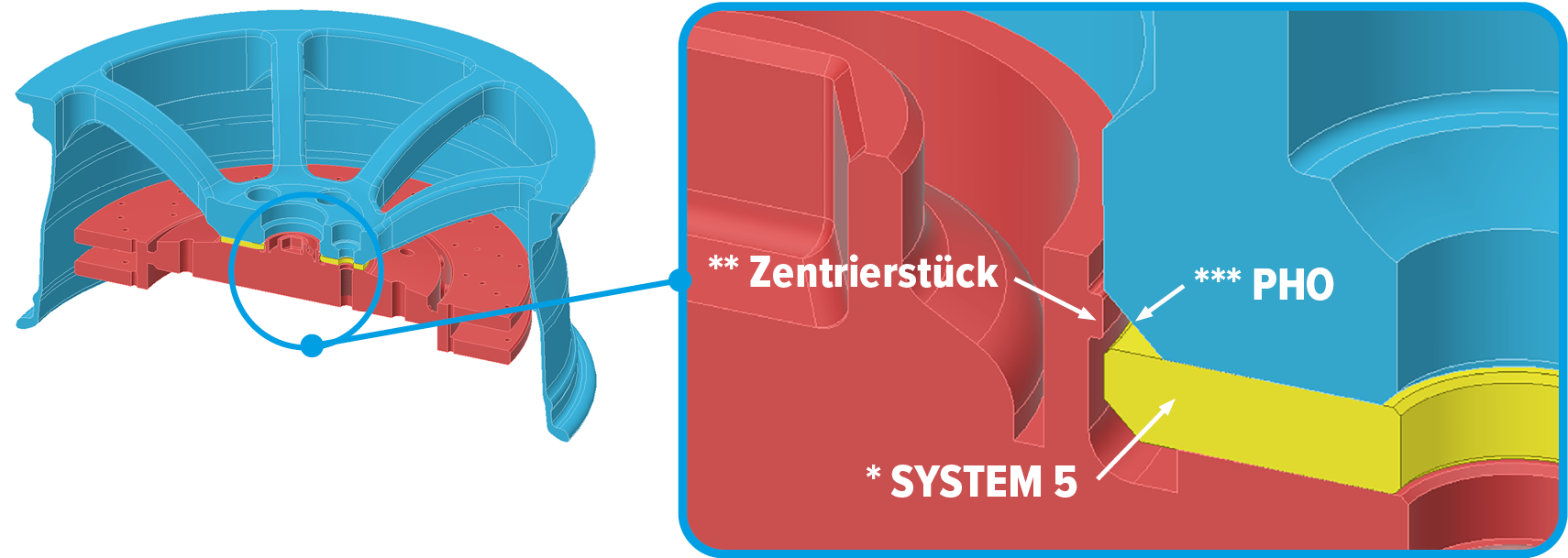
On many newer Audi models, the wheel hub tapers behind the centering collar. As a result, a System 5 wheel spacer (3–10 mm) can no longer be correctly centered on the wheel hub and rim.
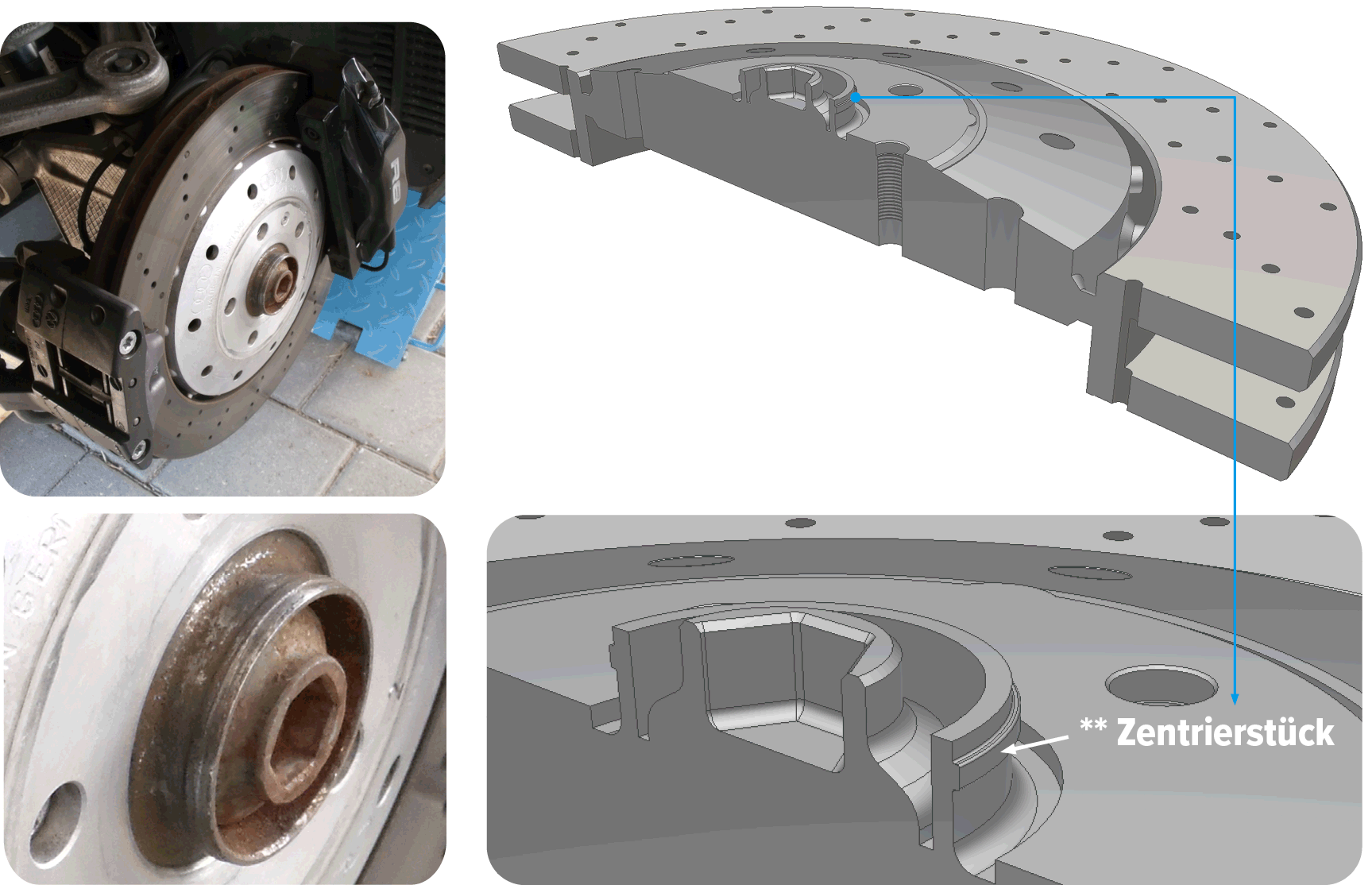
Since proper centering cannot be guaranteed in this case, we do not offer System 5 wheel spacers for these vehicles.
From a thickness of 10 mm, System 2 wheel spacers with double centering can be used instead. These ensure secure centering of the wheel hub and rim.
What must be considered before installing wheel spacers?
How are SCC wheel spacers installed correctly?
What tightening torque must be used during installation?
What must be checked after installation?
After installation, the correct seating of the wheel spacer, the wheel fastening, and the wheel clearance must be checked. The wheel fastening components should also be checked to ensure that they are secure and correctly seated.
2 Wheel Spacers with ABE/TTG
Basics
What are wheel spacers with ABE/TTG?
Wheel spacers with ABE or TTG are tested and approved wheel spacers for specific vehicles and wheel/tire combinations. Their use is subject to compliance with the requirements and conditions specified in the respective approval.
What is the difference between ABE and TTG?
ABE (General Operating Permit) and TTG (Component Type Approval) are approvals for vehicle components. Both specify the vehicles and wheel/tire combinations for which the wheel spacers are permitted and the requirements that must be met.
For which vehicles are SCC wheel spacers with ABE/TTG available?
SCC wheel spacers with ABE/TTG are available for numerous vehicle makes and models. Whether a suitable version is available depends on the respective vehicle and its corresponding vehicle assignment in the ABE/TTG.
How do I find the right wheel spacers with ABE/TTG for my vehicle?
In the SCC online shop, you can select your vehicle by vehicle make or by HSN and TSN. The suitable wheel spacers with ABE/TTG for the selected vehicle will then be displayed.
Do wheel spacers with ABE/TTG need to be registered or inspected?
Not necessarily. For many standard wheel/tire combinations listed in the ABE/TTG, no additional inspection is required. Whether an inspection is necessary depends on the conditions specified in the respective approval.
What requirements must be met so that no additional inspection is required?
The standard wheel/tire combination must be listed in the ABE/TTG, and all requirements and conditions specified therein must be met. If this is not the case, an additional inspection may be required.
What should I do if my vehicle or wheel/tire combination is not listed in the ABE/TTG?
If your vehicle is not listed, the ABE/TTG cannot be used. If only the wheel/tire combination is not listed, an inspection is required. Alternatively, depending on the vehicle, an individual approval based on a technical test report/strength certificate may be possible.
Technical Questions
Which spacer thicknesses are available with ABE/TTG?
The available spacer thicknesses are vehicle-specific. The respective approval specifies which thicknesses with ABE/TTG may be used for the vehicle.
Can I use wheel spacers with ABE/TTG with aftermarket wheels?
Yes, combination with aftermarket wheels is generally possible. If the wheel/tire combination used is not listed in the ABE/TTG, an inspection is required; suitable wheel fastening components must also be used.
Can I use wheel spacers with ABE/TTG with a modified suspension?
Yes, combination with a modified suspension may generally be possible. Whether an additional inspection is required depends on the conditions specified in the respective ABE/TTG as well as the approval documents for the suspension modification.
Can different spacer thicknesses be used on the front and rear axles?
Yes, different spacer thicknesses are possible, provided they are permitted for the vehicle according to the ABE/TTG. The wheel spacers on the front axle must not be wider than those on the rear axle.
Do I need longer wheel bolts when using wheel spacers with ABE/TTG?
For slip-on systems with ABE/TTG, longer wheel bolts are required. The appropriate wheel bolts are already included in the respective ABE/TTG set and must be checked for the required length before installation.
Are the required wheel fastening components included in the ABE/TTG set?
Yes, the required wheel fastening components are supplied with the ABE/TTG set. They are intended for use with the standard OEM wheel.
Do wheel clearance and wheel coverage still need to be checked despite ABE/TTG?
Yes, sufficient wheel clearance and wheel coverage must also be ensured when using wheel spacers with ABE/TTG. In addition, the conditions specified in the respective approval must be observed.
3 Adapters
Basics
What is a bolt pattern adapter?
A bolt pattern adapter allows rims with a different bolt pattern to be fitted. It is installed between the wheel hub and the rim, changes the bolt pattern, and simultaneously increases the vehicle's track width.
When do I need an adapter instead of a wheel spacer?
An adapter is used when the bolt pattern or centering diameter differs between the vehicle and the rim. A wheel spacer, on the other hand, only increases the track width without changing the bolt pattern or centering diameter.
Which adapters are suitable for my vehicle?
The appropriate adapter depends on your vehicle, the rims being used, and the desired bolt pattern. With our Vehicle Search you can find all bolt pattern adapters suitable for your vehicle.
Which bolt patterns can be adapted?
Depending on the vehicle, SCC bolt pattern adapters can be used to adapt various bolt patterns. The available combinations are vehicle-specific and can easily be determined using our Vehicle Search.
If the desired combination is not available, we will be happy to check whether a Custom-Made Solution is possible.
What minimum thickness does an adapter require?
The minimum thickness of a bolt pattern adapter depends on the desired bolt pattern conversion and the wheel fastening. For technical reasons, not every thickness is possible. In our Vehicle Search you can find all available adapter thicknesses for your vehicle.
Can I use OEM wheels or aftermarket wheels with an adapter?
Yes. Depending on the vehicle and adapter, SCC bolt pattern adapters can be used with both OEM wheels and aftermarket wheels. The respective combination must be technically permissible and sufficient clearance must be available.
Technical Questions
Is it possible to adapt from 4-hole to 5-hole?
Yes, adaptation from 4-hole to 5-hole is possible. Different adapter systems are available depending on the bolt pattern.
System 4L:
- For vehicles where the bolt circle diameter remains the same and only the number of holes changes
- Examples: 4×100 → 5×100, 4×130 → 5×130
- Minimum thickness: 20 mm
System 4M:
- For vehicles with different bolt patterns
- Examples: 4×98 → 5×130, 4×100 → 5×139.7
- Minimum thickness: 20 mm
System X:
- For bolt pattern conversions that cannot be achieved with either System 4L or System 4M
- Two-piece adapter with discs permanently bolted together
- Minimum thickness: 25 mm (total thickness)
Is it possible to reduce from 5-hole to 4-hole?
Technically, reducing the number of holes is generally possible. However, a TÜV-tested version is not permitted and is therefore not available.
The reason is that vehicles with a 5-hole mounting configuration generally have higher wheel loads than vehicles with a 4-hole mounting configuration. Reducing the number of holes therefore does not meet the requirements for TÜV approval.
For technically demanding bolt pattern conversions where bolt circles or holes overlap, SCC offers System X. Its two-piece design makes it possible to achieve combinations that would not be possible with a one-piece adapter.
Note: The maximum tested wheel load for System X is 510 kg per wheel.
What is the effective wheel offset (ET) when using an adapter?
The effective wheel offset (ET) is calculated by subtracting the adapter thickness from the wheel offset of the rim.
Example:
- Rim: ET 45
- Adapter: 20 mm
→ Effective wheel offset: ET 25
The effective wheel offset is crucial for the position of the wheel within the wheel arch and should be taken into account when selecting adapters as well as when considering wheel clearance and wheel coverage.
4 Wheel Fasteners
Basics
Which wheel bolt or wheel nut is suitable for my vehicle?
The correct wheel bolt or wheel nut depends on the vehicle, rim, and wheel spacer being used. The key factors are thread, seat type, shank length, and wrench size. When using wheel spacers, the length of the wheel bolts or wheel studs must be adjusted accordingly.
What is the difference between wheel bolts and wheel nuts?
Wheel bolts are screwed directly into the thread of the wheel hub or wheel carrier. Wheel nuts, on the other hand, are screwed onto permanently installed wheel studs. The type of fastening used depends on the vehicle.
What do thread, seat type, and shank length mean?
The thread determines the diameter and pitch of the wheel bolt or wheel stud. The seat type describes the contact surface with the rim, e.g. ball seat or conical seat. The shank length is the length of the wheel bolt from below the seat to the end of the bolt.
What is the difference between a ball seat and a conical seat?
With a ball seat, the contact surface with the rim is spherical; with a conical seat, it is cone-shaped. It is essential that the seat type and dimensions match the rim, as an incorrect version can result in unsafe wheel fastening.
Can I use original wheel bolts with aftermarket wheels?
Only if they are intended for use with the aftermarket wheel. Thread, seat type, and shank length must comply with the wheel manufacturer's specifications. The information provided in the wheel's ABE or technical approval is decisive.
Can I reuse wheel bolts?
Yes, provided they are undamaged and not heavily corroded. As safety-relevant components, they should be inspected regularly.
When should wheel fasteners be replaced?
Wheel fasteners must be replaced if they are damaged, worn, or heavily corroded. As they are safety-relevant components, we recommend replacing them as a precaution every two years.
Which wheel fasteners do I need for aftermarket wheels?
Depending on the manufacturer, aftermarket wheels may require different wheel fasteners than OEM wheels. The key factors are thread, seat type, shank length, and wrench size. Only use wheel fasteners approved by the wheel manufacturer.
Technical Questions
What does M12x1.5 or M14x1.5 mean?
The designation describes the thread. M12 or M14 indicates the thread diameter in millimeters, while 1.5 indicates the thread pitch in millimeters.
How do I determine the correct shank length for wheel bolts?
When using the same rim, the following applies: shank length of the existing wheel bolt + thickness of the wheel spacer = required shank length.
Which wrench size do I need?
The wrench size depends on the bolt head or wheel nut and may vary depending on the version.
Which wheel bolts do I need for wheel spacers?
Longer wheel bolts are required for slip-on systems. The shank length increases by the thickness of the wheel spacer. If the rim remains unchanged, the thread and seat type remain the same as those of the existing wheel bolts.
When are wheel nuts used instead of wheel bolts?
Wheel nuts are used on vehicles with permanently installed wheel studs.
What surface finish do SCC wheel fasteners have?
Depending on the version, SCC wheel fasteners are zinc-plated or provided with a special surface coating that offers increased corrosion protection.
Which tightening torques apply?
The specifications of the vehicle or wheel manufacturer apply. The wheel fasteners must be tightened accordingly using a torque wrench.
What does the strength class mean?
The strength class indicates the mechanical tensile strength and yield strength of a bolt. For example, class 10.9 has a tensile strength of 1000 N/mm² and a yield strength of 900 N/mm².
Do I need wheel locks?
Wheel locks are optional and provide additional theft protection for the wheels. They must be compatible with the respective wheel fastening system.
5 Centering
Basics
What does centering mean for wheel spacers?
Centering ensures that the wheel spacer and wheel are aligned centrally with the wheel hub, ensuring smooth and even rotation.
Why is wheel centering important?
Correct centering ensures that the wheel sits centrally on the wheel hub and rotates evenly. This helps prevent vibrations and runout problems.
What is the difference between vehicle-side and wheel-side centering?
On the vehicle side, the wheel spacer is centered on the wheel hub; on the wheel side, the wheel is centered on the wheel spacer.
What is a wheel spacer with centering?
A wheel spacer with centering has a wheel-side centering collar that centers the wheel on the wheel spacer.
What is a wheel spacer without wheel-side centering?
It does not have its own centering collar for the wheel. The wheel continues to be centered by the centering collar of the vehicle hub, provided that it protrudes far enough.
Which centering do I need for my vehicle?
The appropriate centering depends on the vehicle hub, rim, and thickness of the wheel spacer. The respective dimensions must be matched to one another.
What is the difference between System 2 and System 5?
System 2 is a slip-on system with double centering and is available in thicknesses from 5–35 mm. System 5 is a slip-on system without wheel-side centering and is primarily recommended for small track width increases of 3–5 mm per wheel.
From what spacer thickness is centering possible?
Depending on the vehicle and hub geometry, wheel-side centering is theoretically possible from as little as 5 mm per wheel, but this must always be checked in advance. As a rule, spacers from 10 mm per wheel can be used with double centering.
Can I use wheel spacers without wheel-side centering?
Yes, provided that the vehicle-side centering still extends far enough into the rim despite the wheel spacer and the wheel continues to be centered correctly.
Technical Questions
How is the rim centered when using a wheel spacer?
With systems featuring wheel-side centering, the rim is centered via the centering collar of the wheel spacer and aligned centrally with the wheel hub.
How is the wheel spacer centered on the vehicle hub?
The wheel spacer is precisely aligned via its center bore on the centering collar of the vehicle hub.
What does centering collar diameter (ZBD) mean?
The centering collar diameter (ZBD) refers to the outer diameter of the centering collar on which the rim is centered.
What does centering collar height (ZBH) mean?
The centering collar height (ZBH) refers to the height of the centering collar used to center the rim on the wheel spacer.
What does hub bore depth (NLT) mean?
The hub bore depth (NLT) indicates how far the centering collar of the vehicle hub can extend into the wheel spacer.
What does PHO mean?
PHO refers to the chamfer at the center bore of the rim. It must match the design of the wheel spacer so that the rim sits completely flush on the wheel spacer and can be centered correctly.
What are centering rings and what are they used for?
Centering rings compensate for different diameters between the center bore of the rim and the vehicle hub, ensuring precise centering of the wheel. Depending on the version, they are available in plastic or aluminum.
What are SCC Center Sleeves and what are they used for?
SCC Center Sleeves are aluminum centering sleeves installed on the vehicle hub. They are used to adapt the centering and ensure precise centering of the wheel.
What are the differences in centering between the SCC systems?
Depending on the system, the wheel is centered either directly via the vehicle hub or via the centering collar of the wheel spacer. The type of centering depends on the system, spacer thickness, and the geometry of the vehicle hub and rim.
Which SCC systems are available with and without wheel-side centering?
System 2 and its special versions, System 3, and the System 4 variants feature double centering. System 5 does not have wheel-side centering; the wheel continues to be centered via the vehicle hub.
How do I check whether the vehicle hub, wheel spacer, and rim are compatible?
The centering dimensions and mounting surfaces must be compatible with one another. The wheel spacer and rim must be precisely centered and sit completely flush.
Why must the wheel spacer sit flush against the wheel hub?
Full and flush contact is essential for safe installation. If the wheel spacer does not sit completely flush, it may be damaged or even destroyed during installation. Safe installation of the wheel is then not possible.
Why must the rim sit flush against the wheel spacer?
The rim must have full and flush contact to ensure secure wheel fastening. If the wheel spacer does not sit completely flush, it may be damaged or even destroyed during installation. Safe installation of the wheel is then not possible.
What happens if the centering collar is too long?
A centering collar that is too long can bottom out in the spacer's NLT and damage or break off the spacer's centering collar during installation. In this case, correct installation is not possible.
What is a broken centering collar and what can cause it?
A broken centering collar refers to the centering collar of a wheel spacer breaking off. This can be caused by incompatible rim geometry, incomplete or uneven contact, or improper installation.
Can a wheel spacer with a damaged centering collar continue to be used?
No. If the centering collar is damaged or broken, correct centering can no longer be guaranteed. The wheel spacer must be replaced.
What happens if the hub bore depth of the wheel spacer is insufficient?
If the hub bore depth is too shallow, the vehicle hub may bottom out inside the wheel spacer, preventing the spacer from sitting completely flush against the wheel hub. Correct installation is then not possible.
Why are there different versions of System 2?
The different System 2 versions are designed for specific vehicle and hub configurations. This allows suitable double centering even for special requirements.
Why can centering problems occur with System 5?
System 5 does not have wheel-side centering. If the centering collar of the vehicle hub does not extend far enough into the rim after the wheel spacer has been installed, the wheel can no longer be centered correctly.
Can centering problems cause vibrations or steering wheel vibration?
Yes. Incorrect wheel centering can cause vibrations or steering wheel vibration, which may become particularly noticeable at higher speeds.
What must be considered for Audi vehicles with a tapered hub?
On many newer Audi models, the wheel hub is tapered in front of and behind the centering area. With System 5, the remaining centering area may therefore be located within the rim chamfer (PHO), making correct centering of the rim impossible.
6 Camper Line
Basics
What is the SCC Camper Line?
The SCC Camper Line includes wheel spacers specially developed for motorhomes and campers. They provide a wider track and increased driving stability while also enhancing the vehicle's appearance.
What are the benefits of wheel spacers for campers?
The wider track increases driving stability, reduces body roll, and improves straight-line stability. It can also reduce the effects of road ruts and crosswinds, contributing to greater driving comfort and more stable handling.
For which campers and motorhomes are SCC wheel spacers available?
SCC offers wheel spacers for numerous campers and motorhomes from various manufacturers and for a wide range of vehicle models.
How do I find the right wheel spacers for my camper?
In the Camper Line section, you can search for your vehicle by make or EC number. For the most accurate vehicle identification possible, SCC recommends searching using the EC number from field K of the vehicle registration certificate.
Why should I search using the EC number?
The EC number enables precise vehicle identification and ensures that the appropriate wheel spacers and technical approval documents for the respective vehicle are displayed.
Where can I find the EC number?
The EC number can be found in field K of the Registration Certificate Part I (vehicle registration document).
What should I do if my camper is not listed?
If your exact vehicle model is not listed, you can complete the camper form and send it to info@spurverbreiterung.de. Based on the vehicle data provided, SCC will check the appropriate solution for your vehicle.
Is the body manufacturer or the base vehicle decisive when selecting wheel spacers?
The EC type approval of the complete camper or motorhome is decisive for the selection, as vehicles may differ depending on the body configuration even if they use the same base vehicle.
Which technical approval documents are available for campers and motorhomes?
Motorhome-specific component approval certificates are available for many campers and motorhomes, making the inspection and approval process easier. If the vehicle is not listed in the component approval certificate, an individual approval may be possible on the basis of a strength certificate.
What should I do if my camper is not listed in the approval document?
If the motorhome is not listed in the component approval certificate, an individual approval is generally possible using a comparable approval document and proof of strength.
Technical Questions
Which spacer thickness is possible for my camper?
The possible spacer thickness depends on the vehicle. The respective component approval certificate specifies the permitted spacer thicknesses; the actual suitable thickness depends, among other factors, on wheel clearance and wheel coverage on the vehicle.
Can I use wheel spacers with my camper's OEM wheels?
Yes, OEM wheels can generally be used with SCC wheel spacers, provided that the wheel/tire combination is covered by the respective approval document and all specified conditions are met.
Can I use wheel spacers with aftermarket wheels on my camper?
Yes, combination with aftermarket wheels is generally possible, provided that the wheel/tire combination used is permitted with the wheel spacers and the respective approval documents and conditions are observed.
Do I need longer wheel bolts?
Longer wheel bolts are required for slip-on systems. The required shank length is calculated by adding the thickness of the wheel spacer to the length of the original wheel bolt.
What should be considered for vehicles with wheel studs and wheel nuts?
Depending on the wheel spacer system used, different wheel fastening requirements apply. With System 3, longer wheel studs are not required; the rim is secured to the wheel spacer's studs using the original wheel nuts.
Can different wheel spacer thicknesses be used on the front and rear axles?
Yes, different spacer thicknesses are possible. However, the wheel spacers on the front axle must not be wider than those on the rear axle.
What should be considered regarding the camper's permissible axle load?
The wheel spacer must be designed and approved for the respective axle load of the camper. The permissible load values specified in the corresponding approval document are decisive.
Are SCC wheel spacers also suitable for heavy motorhomes?
Yes, with the Camper Line, SCC also offers wheel spacers for heavy motorhomes and Maxi/Heavy versions. The vehicle-specific approval in the respective approval document is decisive.
What should be considered for campers with dual wheels?
For dual-wheel configurations, it must be checked whether the wheel spacer is suitable for the respective vehicle and axle configuration and whether it is covered by the corresponding approval document.
What should be considered for campers that have been converted after initial registration?
For subsequently converted campers, it must be checked whether the current vehicle and wheel/tire configuration is covered by the respective approval document. Modifications to the wheels or suspension may require an additional inspection.
7 Wheel Coverage, Clearance & Offset Limit
Basics
What does wheel coverage mean?
Wheel coverage describes the prescribed area in which the tire and rim must be sufficiently covered. Within this area, neither the tire sidewall nor the rim edge may protrude beyond the wheel coverage. It is a decisive criterion for determining the maximum possible wheel spacer thickness.
What does wheel clearance mean?
Wheel clearance describes whether the wheel and tire can move without coming into contact with the suspension, bodywork, or other vehicle components. There must be no rubbing or contact even at full steering lock or during suspension compression. Sufficient clearance is a decisive criterion for determining the maximum possible wheel spacer thickness.
What is the offset limit?
The offset limit specifies the minimum permissible wheel offset for the respective vehicle and must not be exceeded by the combination of rim and wheel spacer. It relates to the strength of the suspension and axle components. Wheel clearance and wheel coverage must be checked and complied with separately.
Where can I find the permissible offset limit for my vehicle?
The vehicle-specific offset limits can be found in the SCC online shop or in the corresponding technical approval and authorization documents. The applicable offset limit depends on the respective vehicle and the basis of the approval.
Technical Questions
How do I check wheel clearance?
Wheel clearance is checked directly on the vehicle. It must be ensured that the tire and rim do not come into contact with the bodywork, suspension, or other vehicle components during suspension compression. Checking the actual vehicle is essential, as the available clearance depends on the specific vehicle, rim, and tire combination.
How do I check whether the wheel coverage is sufficient?
Wheel coverage is checked directly on the vehicle. Within the prescribed area of 30° to the front and 50° to the rear, neither the tire sidewall nor the rim edge may protrude beyond the existing wheel coverage.
What happens if the offset falls below the permitted limit?
If the permissible offset limit is exceeded, the respective wheel and wheel spacer combination is not permitted within the specified offset limits. The offset limit must be observed in particular with regard to the strength of the suspension and axle components.
Does compliance with the offset limit automatically mean that wheel clearance and wheel coverage are ensured?
No. The offset limit relates to the strength of the suspension and axle components. Even if the offset limit is complied with, wheel clearance and wheel coverage must be checked separately on the vehicle and must meet the applicable requirements.
What options are available if the required wheel coverage is not achieved?
If the required wheel coverage is not ensured, the selected combination must be adjusted. Depending on the vehicle, a smaller spacer thickness may be required, for example. The decisive factor is that the prescribed wheel coverage requirements are met.
8 Registration & Approval Documents
Basics
Do wheel spacers need to be registered?
Yes, wheel spacers and adapter spacers generally require approval. If a component approval certificate is available, a technical inspection is required; however, the vehicle documents do not necessarily have to be amended immediately. Custom-made products and certain adapter spacers may require individual approval in accordance with § 21 StVZO.
What is the difference between an ABE, a component approval certificate and a strength certificate?
An ABE permits the use of the component under the conditions specified in the document. A component approval certificate serves as the basis for technical approval. A strength certificate confirms the tested strength of the component and can serve as the basis for individual approval.
Is the approval document sufficient for TÜV registration?
A component approval certificate serves as the basis for the technical inspection by TÜV or another recognized inspection organization. Whether additional documents are required depends on the requirements and conditions specified in the respective approval document.
How do I identify the correct approval document for my wheel spacers?
The appropriate approval document depends on the vehicle, wheel spacer and spacer thickness. Compare the vehicle and article numbers in the approval document with the details of your vehicle and wheel spacers.
Why is my vehicle not listed in the approval document?
If your vehicle is not listed, it is not covered by the respective component approval certificate. Depending on the vehicle and wheel spacers, individual approval based on a strength certificate may be possible.
Why are there several approval documents for my vehicle?
Different approval documents may apply to a vehicle depending on the version, wheel spacers and wheel/tire combination. The decisive factor is that the vehicle and the components used are listed in the respective approval document.
Why is there no ABE for my vehicle?
An ABE is only available for certain tested vehicle and wheel/tire combinations. If no ABE is available, a component approval certificate or strength certificate may be available for approval, depending on the vehicle.
Which documents do I need to bring to the technical inspection?
For the inspection, you will need the vehicle documents and the approval document applicable to your wheel spacers. Depending on the vehicle and modification, additional documents may be required.
Does an ABE need to be entered in the vehicle documents?
Generally, no. If the wheel/tire combination used is listed in the ABE and all specified requirements are met, registration of the wheel spacers is not required. If the combination is not included or the requirements specify that an inspection is necessary, a technical inspection is required.
What does individual approval in accordance with § 21 StVZO mean?
With individual approval, the vehicle modification is assessed individually by an inspection body. It may be required if no suitable component approval certificate or ABE is available and can be carried out on the basis of a strength certificate or technical test report.
When is individual approval required?
Individual approval is required if no suitable vehicle-specific test document (ABE or component approval certificate) is available. A strength certificate or technical test report can serve as the basis for individual approval.
Is the approval document also valid abroad?
German approval documents are not automatically recognized abroad. Whether and under which conditions recognition is possible depends on the regulations of the respective country. For Switzerland, for example, separate FAKT certificates are required or available.
What is a FAKT certificate?
A FAKT certificate is vehicle-specific proof of testing for Switzerland and serves as the basis for the approval of SCC wheel spacers. It must first be checked whether the vehicle is covered by the respective certificate.
When do I need a FAKT certificate for Switzerland?
A FAKT certificate is required if corresponding Swiss proof of testing is necessary for the approval and registration of SCC wheel spacers in Switzerland.
How do I obtain a FAKT certificate for my SCC wheel spacers?
Select the appropriate FAKT certificate in the online shop and complete the order as usual. The certificate will then be sent to you by post.
Technical Questions
What does "from chassis number" mean?
This information indicates the chassis number (VIN) from which the respective approval document applies. You can find the VIN in field E of your Registration Certificate Part I.
Why does the approval document end before my vehicle's model year?
Approval documents only apply to the vehicle versions and approval statuses tested and listed in them. Later model years are therefore not automatically covered by the approval document.
What does the note "only in combination with OEM wheels" mean?
This note means that the approval document is only valid in combination with the standard wheel/tire combinations specified for the vehicle. A separate approval may be required for aftermarket wheels.
Are combinations with aftermarket wheels included in the approval document?
Aftermarket wheels are not automatically covered by the approval document. The decisive factor is whether the wheel/tire combination used is listed in the respective approval document. If this is not the case, a separate approval may be required.
What should be considered when combining wheel spacers with aftermarket wheels?
It must be checked whether the wheel/tire combination together with the wheel spacers is covered by the respective approval document. If this is not the case, a separate approval may be required.
Why can I only find my vehicle under a different trade name?
Vehicles may be listed in the approval document under a different model or type designation. The decisive factor is that the vehicle data matches the information in the approval document.
How can I obtain a duplicate copy of my approval document?
To check whether a duplicate copy can be issued, the vehicle data and the article number of the SCC wheel spacers are required. SCC Customer Service will then check whether a duplicate copy of the appropriate approval document is available.
9 Ordering
Basics
How do I find the right product for my vehicle?
The vehicle search in the SCC online shop allows you to find suitable products based on the vehicle make or using the manufacturer key number (HSN) and type key number (TSN).
How can I place an order?
Select the desired products, add them to your shopping cart and then complete the order through the checkout process in the SCC online shop.
Which payment methods are available?
Various payment methods are available in the SCC online shop, including PayPal, credit card, instant bank transfer and cash payment upon collection.
How much are the shipping costs?
Within Germany, shipping costs are €5.95 per order. Country-specific shipping costs apply to deliveries abroad. There are no shipping costs for customer collection. More information here
How long does delivery take?
Delivery time depends on product availability and the destination country. The current delivery time is displayed directly with the product in the SCC online shop. More information here
How can I tell whether a product is available?
Availability is displayed directly with the product in the SCC online shop. A distinction is made between "Available immediately", "Incoming stock" and "Custom-made".
Can I change or cancel my order afterwards?
For changes or cancellations, please contact SCC Customer Service as soon as possible. Whether a change is still possible will be checked on a case-by-case basis.
Can I add products to my order afterwards?
Whether products can be added to an existing order afterwards is checked on a case-by-case basis. Please contact SCC Customer Service as soon as possible.
Where can I find my order confirmation?
After the order has been completed, the order confirmation is sent by email to the email address provided during the ordering process.
How can I check the status of my order?
Registered customers can view the current order status in their customer account under their orders. SCC Customer Service is available for any further questions.
Will I receive shipment tracking information?
As soon as the order has been shipped, the tracking number will be provided so that you can track the delivery.
Can I also order from abroad?
Yes, international deliveries are possible. Shipping costs and delivery conditions depend on the respective destination country and are displayed during the ordering process.
What should I do if my delivery is incomplete or damaged?
Incomplete or damaged deliveries can be reported using the SCC RMA module. For faster processing, please include clear photos and a brief description.
Custom-made Products & Special Cases
What should I do if I cannot find the product I need in the shop?
If the desired product is not available in the standard product range, a custom-made product can be requested. Technical feasibility will then be checked.
How can I order a custom-made product?
Custom-made products are requested via "Custom-made product" in the customer account. Once the request has been processed by the engineering department, you will be notified by email and the custom-made product will be added to your shopping cart. The order can then be completed through the regular ordering process. Order here
What information is required for a custom-made product?
Vehicle data, wheel data and information about the desired wheel spacers are required. A completed measurement sheet can also be uploaded.
Which products can be manufactured as custom-made products?
Wheel spacers and adapters can be manufactured as custom-made products according to individual requirements. Technical feasibility is checked in advance.
How long does it take to manufacture a custom-made product?
Production time depends on the respective design. The current delivery time is displayed directly with the product in the SCC online shop.
Why do custom-made products take longer to manufacture?
Custom-made products are individually designed and manufactured. Additional work steps such as engineering, machine programming, coating and final quality control result in a longer production time.
Can a custom-made product be changed or cancelled afterwards?
Changes or cancellations should be requested as soon as possible. Whether they are still possible depends on the current processing or production status of the custom-made product.
Can I return a custom-made product?
Custom-made products are manufactured individually according to customer specifications and are therefore generally excluded from returns.
Is an approval document available for custom-made products?
A strength certificate is available for custom-made products as the basis for individual approval in accordance with § 21 StVZO. In addition, manufacturer approval can be requested.
10 Returns & Complaints
Basics
How are returns and complaints handled?
Returns and complaints are handled via the SCC RMA module. There, you can select the relevant products, register the return and generate the required documents and shipping label.
Where can I find the RMA module?
The RMA module can be found in the SCC online shop under "Returns". Customers with an account can access it by logging in, while guest orders can be accessed using the corresponding order details. Go to returns
What information do I need for a return?
For guest orders, the order year, order or invoice number, and first and last name are required to register a return. For orders placed through a customer account, the order is assigned after login. Go to returns
Can I also return individual products from an order?
Yes, the SCC RMA module allows you to select either complete orders or individual products from an order for return.
Which documents do I need to include with the return?
The RMA summary received by email must be enclosed with the package. Otherwise, your return cannot be assigned correctly.
How do I report a damaged or incorrectly delivered product?
Complaints are registered via the SCC RMA module. For faster processing, please describe the reason for the complaint and upload clear photos in the event of damage.
How long does it take to process my return or complaint?
Processing time depends on the type and scope of the case and may therefore vary.
How and when will I receive my refund?
Once the return has been received and inspected, the corresponding refund amount will be reimbursed. The refund will be made using the original payment method unless otherwise agreed. Processing time may vary depending on the type and scope of the case.
Special Cases
Can I return a product that has already been installed?
Products that have already been installed can generally be sent in for inspection. Whether a return is possible depends on the condition of the product and the respective reason for return.
Can I return a custom-made product?
No. Custom-made products are generally excluded from returns because they are manufactured individually according to customer specifications.
What should I do if I no longer have my order, invoice or delivery note number?
In this case, SCC Customer Service can help identify the order. The customer details provided when the order was placed will be required.
Who pays the return shipping costs?
In the event of withdrawal, the buyer bears the direct cost of returning the goods. Different arrangements may apply to complaints.
Can I return several orders together?
A return must be registered separately for each order via the SCC RMA module. Whether several returns can be shipped together should be clarified with SCC Customer Service in advance.
Can I exchange a product directly?
Whether a direct exchange is possible depends on the respective case. The return can be registered via the SCC RMA module; the further procedure will then be reviewed.
What happens if my return is incomplete?
An incomplete return cannot be fully processed. Missing products, accessories or supplied components should be sent afterwards; otherwise, they may be charged or deducted from the refund.
What happens if a returned product shows signs of use?
If a returned product shows signs of use or installation, its condition will be assessed during processing. Depending on the type and extent of the reduction in value, the refund may be reduced or, where applicable, may not be issued.
What should I do in the event of transport damage?
Transport damage should be reported via the SCC RMA module and documented with clear photos of the goods and packaging. The packaging should be retained until the matter has been resolved.
What should I do if tracking shows that my return has arrived but it has not yet been processed?
Once the return has arrived, inspection and processing may take some time. If you have questions about the current processing status, please contact SCC Customer Service.
